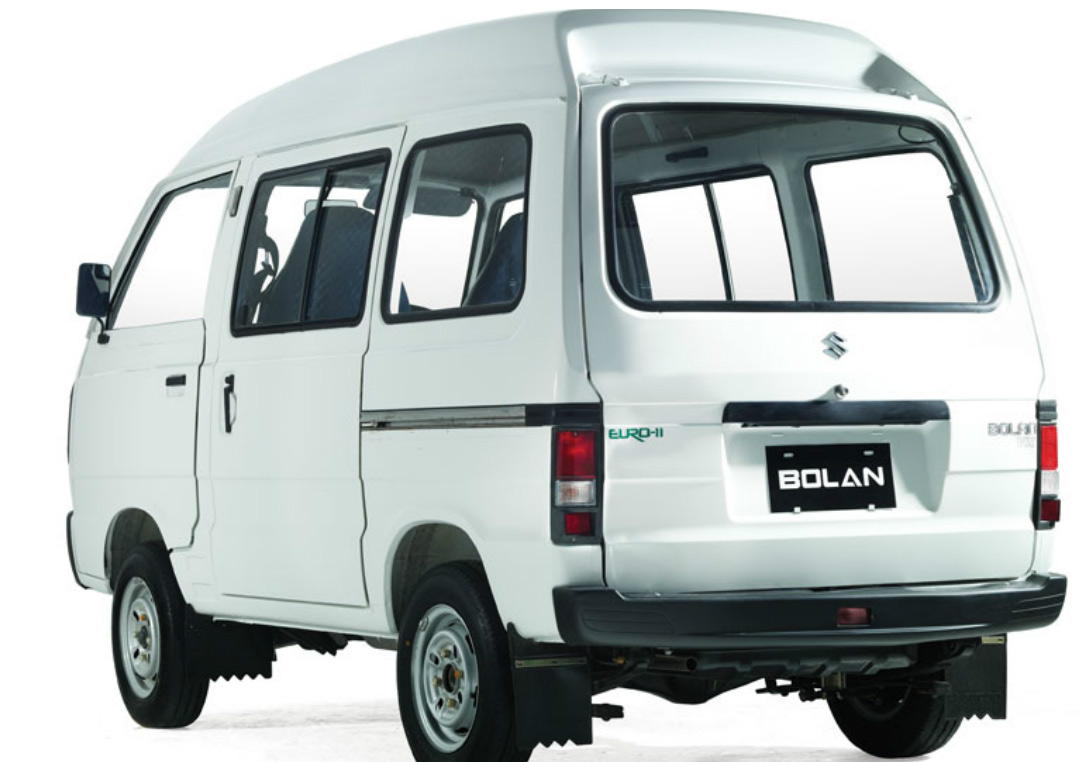
 e Suzuki Bolan also known as Carry Daba featured some very minor cosmetic upgrades and a brand new Euro-II compliant. Suzuki Bolan is a mid-engine front wheel drive mini MPV. Suzuki Bolan MPV has remained virtually unchanged since its launch in Pakistan in the early 90’s. Bolan comes in 2 variants VX and VXR. Production of the Suzuki Bolan 2016 has been ongoing for over four years, the Suzuki Bolan was and is available to purchase during the years 2012, 2013, 2014 and the year 2015. The Suzuki Bolan price in Pakistan is 6 lacs to 7 lacs PKR is fairly competitive when compared to other models in the same class available in the local market.
Friday, 3 March 2017
Bolan
e Suzuki Bolan also known as Carry Daba featured some very minor cosmetic upgrades and a brand new Euro-II compliant. Suzuki Bolan is a mid-engine front wheel drive mini MPV. Suzuki Bolan MPV has remained virtually unchanged since its launch in Pakistan in the early 90’s. Bolan comes in 2 variants VX and VXR. Production of the Suzuki Bolan 2016 has been ongoing for over four years, the Suzuki Bolan was and is available to purchase during the years 2012, 2013, 2014 and the year 2015. The Suzuki Bolan price in Pakistan is 6 lacs to 7 lacs PKR is fairly competitive when compared to other models in the same class available in the local market.

Wednesday, 1 March 2017
Belta
 he Toyota Belta (Japanese: トヨタ ベルタ Toyota Beruta?), referred to in North American and Australian markets as the Toyota Yaris and in Asian markets as the Toyota Vios, is a subcompact sedan manufactured by Toyota.
The successor to the discontinued Toyota Platz sedan, the Belta has increased in size over the previous generation such that its interior volume is larger than the 2000–2007 Corolla. The Belta went on sale in Japan on 28 November 2005 equipped with 1.0- to 1.3-liter engines and is available at Toyota dealership Toyopet Store. Export sales began in 2006, with most markets receiving a 1.5-liter engine as standard fitment.[2]
For most Asian markets (except Japan), the Belta is sold as the Vios is built and assembled in Thailand and the Philippines. For the Japanese, American and Middle Eastern markets (except Israel and Morocco) the Belta is built in Japan.
The Vitz (XP90) and the Belta (XP90) share underpinnings with each other including the drivetrain and platform. However, while the Vitz was designed at Toyota's French design studios, the Belta was designed at Toyota's Japanese design studios—design projects for similar cars marketed toward different demographics. While the outgoing Vitz and Platz models look and feel very much alike, the new Vitz hatchback and Belta sedans are more subtly related. No sheetmetal is shared between the two, and although both have a similar centralized dashboard design (Toyota's efforts to standardize the design for all markets, left or right hand drive) there are some cosmetic differences. The Belta is the only subcompact sedan which is designed, built and sold in Japan, and has no direct competitors in the Japanese Domestic Market, as the Vitz's competitors do not offer sedan versions.
The Japanese Belta was discontinued in June 2012; however, the Yaris sedan is currently still in production for Mexico.
Contents
[hide]Powertrains[edit]
The Belta offers a 53-kilowatt (71 hp) 1.0-liter 1
Cultas
 The Suzuki Cultus is a supermini car produced by the Japanese manufacturer Suzuki from 1983 to 2003. It was first presented at the 25th Tokyo Motor Show, formally introduced to Japan in 1983 and ultimately sold in seven countries across three generations and marketed worldwide as the Suzuki Swift. An alliance formed in 1981 between GM and Suzuki (and Isuzu) allowed GM to market the Cultus as a captive import internationally under more than a dozen nameplates including the Geo Metro, Chevrolet Sprint, Pontiac Firefly and Holden Barina.[1] It was also known as the M-car within GM.
Offered across its lifespan in four body-style variations with engines from the Suzuki G engine family, the second generation Cultus still remains in production in Pakistan. The Cultus family of vehicles has been marketed in Asia, North America, South America, Australia, and Europe. While never formally marketed in New Zealand they were imported and sold on the secondary market.
Mehran
 The Suzuki Mehran is a globally retired small car manufactured and marketed by Pak Suzuki Motors, a subsidiary of Suzuki in Pakistan. It is a rebadged second-generation Suzuki Alto CA/CC71 which was sold in the Japanese and European market from 1984 to 1988. Pakistan remains the only country where the vehicle is still in production. When the second generation of Suzuki Mehran arrived in Pakistan in 1989, it cost around PKR 90,000.[1] It is among the top-selling car in Pakistan.
In 2015, press reports indicated the car sold for US$6,500-7700,[2] a very high price for a car with everything manually operated, and with no safety features. The car lacks airbags, abs, rear window defogger, side air conditioner vents, seat belt reminder and even rear seat belts.[3]
From its production to now, its passenger A/C vent has been removed, headlights and tail-lights,bumpers and front grill have been renewed. However, after 2013, a EURO II engine was installed to meet the requirements of Pakistan's lagging emission standards. The suspension system is based on a low cost obsolete earlier leaf sprung rigid axle instead of shock absorbers.
Honda Cd 70
 he Honda 70 is a small four stroke motorcycle made since 1970 by Atlas Honda.
Introduced to compete against rival two-stroke small capacity motorcycles, the Honda 70 had an engine displacement of 72 cc (4.4 cu in). This motorcycle was called the Honda CD 70 E, but models from 1970 to 1983 were called the Honda 70, with a Honda 70 logo on the side covers.
The Honda 70 had a triangular speedometer with gear range markings and a maximum calibration of 60 mph (97 km/h). The claimed top speed was 53 mph (85 km/h).[citation needed] The engine was constantly upgraded and modified. In 1984 the bike was released as the Honda CD70. It had a variety of changing logo stickers, and in 2012, there were changes in the shape of engine, carburettor and rear signals which were moved lower, near the back light. This differentiated the 70 from other local brands of bikes that were copying its design.
BMW
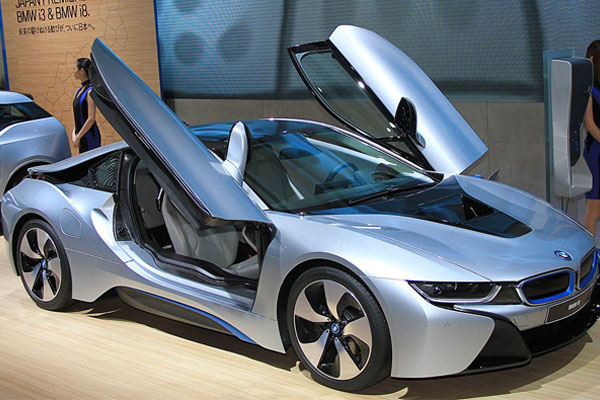 Bayerische Motoren Werke AG (German pronunciation: [ˈbaɪ̯ʁɪʃə mɔˈtʰɔʁn̩ ˈvɛɐ̯kə] (
 listen); German for Bavarian Motor Works), usually known under its abbreviation BMW (German pronunciation: [ˈbeːˈʔɛmˈveː] ( listen)), is a German luxury vehicle, motorcycle, and engine manufacturing company founded in 1916. It is one of the best-selling luxury automakers in the world.[3] The company is a component of the Euro Stoxx 50 stock market index.[4]Headquartered in Munich, Bavaria, BMW owns Mini cars and is the parent company of Rolls-Royce Motor Cars. BMW produces motorcars under the BMW Motorsport division and motorcycles under BMW Motorrad, and plug-in electric cars under the BMW i sub-brand and the "iPerformance" model designation within the regular BMW lineup.
Vitz.
 The Toyota Vitz is a line of three- and five-door hatchback subcompact cars produced since 1999 by the Japanese automobile manufacturer Toyota. Now in its third generation, the name "Toyota Vitz" has been used consistently in Japan, with most international markets receiving the same vehicle under the Toyota Yaris name, or formerly as the Toyota Echo in some markets for the first generation. The Toyota Vitz is available in Japan from Toyota's Netz Store line of dealerships.
Subscribe to:
Posts (Atom)